
Matsuri.
Going to Toyama for Golden Week.

Dear fellow language learners,
It’s been a while since I did a proper post.
After taking a break from things for a while, I want to slowly get back to posting useful and interesting content here and on YouTube. There are two videos + a giveaway of one of my favorite dictionaries on the way, so keep your eyes peeled! I’ll share everything here once I finish editing.
In this post, I’d like to share some images from a recent trip. For this year’s Golden Week I went to Toyama. While there, I visited some of the neighboring towns, such as Takaoka 高岡 and Himi 氷見, but the place that left the biggest impression was a small town about half an hour outside the city called Johana (城端 じょうはな).
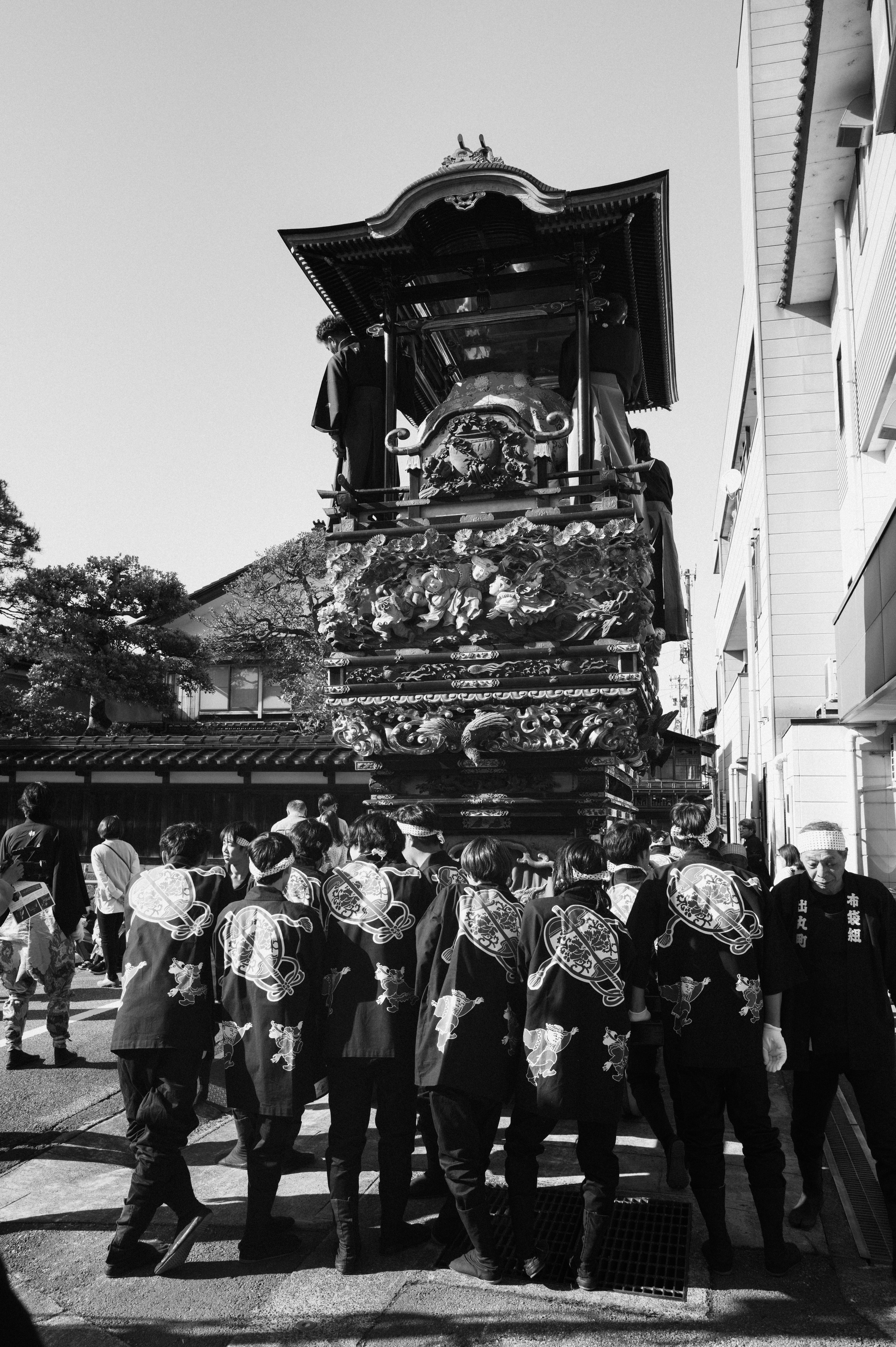
Every year on May 5th, Johana is home to the 城端曳山祭り (じょうはなひきやままつり). The festival has been around since the early 1700s and was declared part of UNESCO’s ICH in 2016. 曳山 refers to the 山車 (だし), or festival cars, that make up the parade. The cars make the loudest, most eerie noise as they move through the town’s narrow alleyways:
One of the main attractions of the festival is the performance of the iori-uta 庵唄. This song is performed from inside the iori-yatai 庵屋台 and repeated throughout the day in various locations in the town. Experiencing the sounds of the song is especially magical when the night falls and the warm glow of the lanterns fills the air:
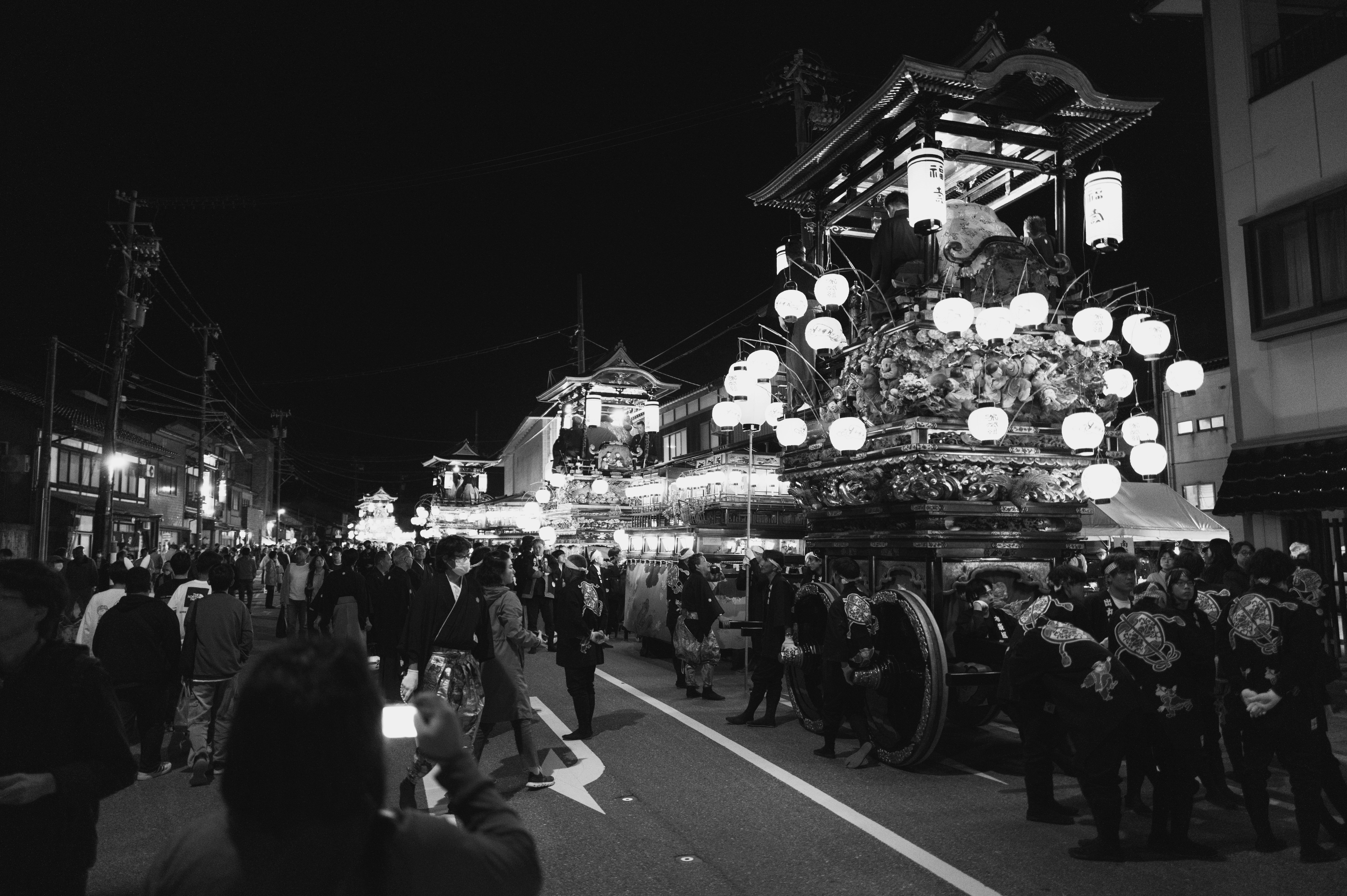
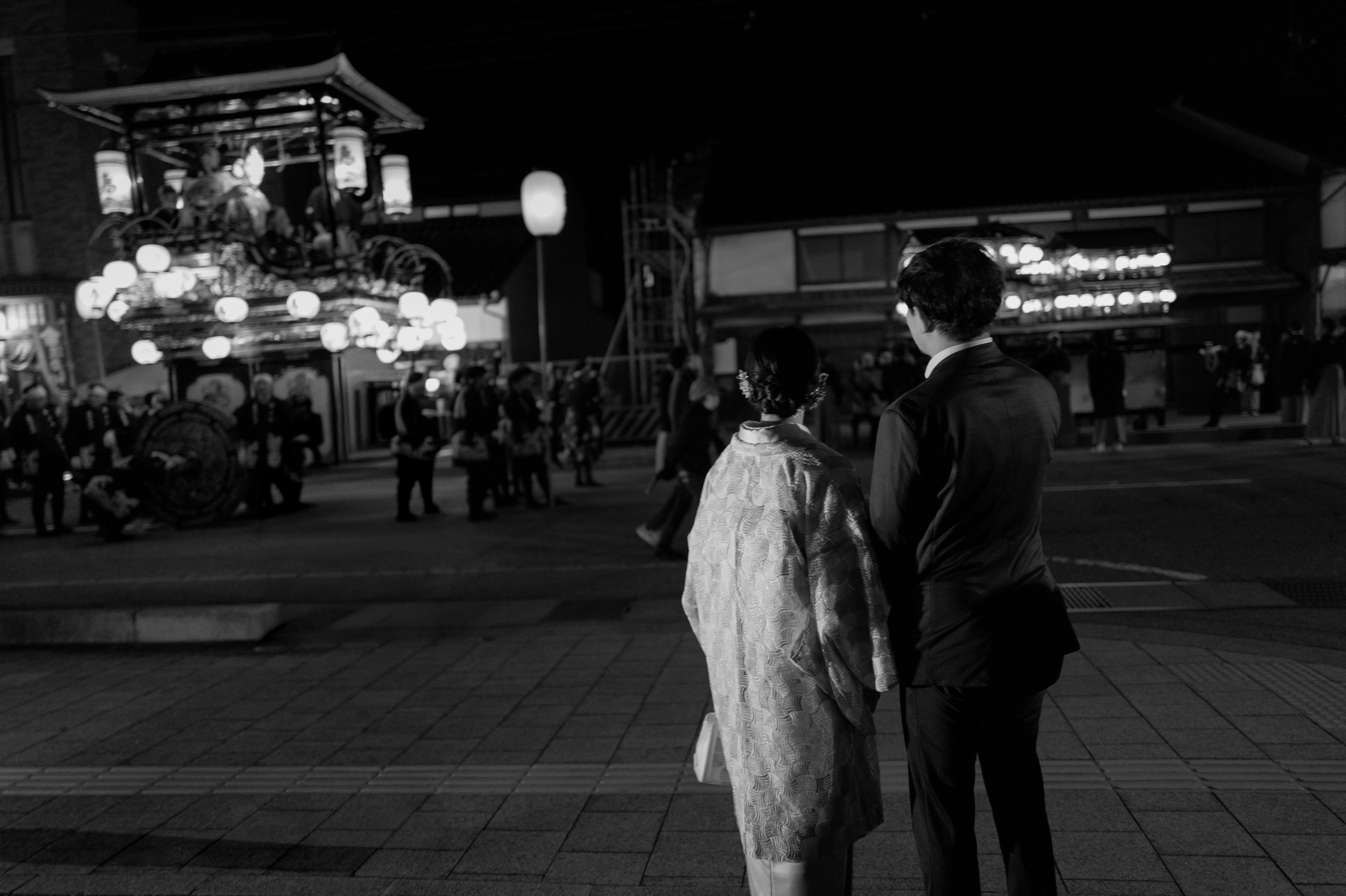
There’s food and games at the stalls near the town’s temple, too. It was the most peaceful way to spend Golden Week, without any of the overwhelming crowds that you often see at the bigger festivals in Tokyo and Kyoto these days. Very different from the experience at Kurama’s fire festival that I attended last year, but I’ll save my impressions of that day for my next post.
I tried looking for authors from the region, but unfortunately I couldn’t find any references to this particular festival in the few moments I spent glancing over the readily available literature. So instead, here’s a completely unrelated snippet from Genji Keita’s Zuikosan 随行さん. Genji is a Toyama native and is considered one of the pioneers of the genre of サラリーマン小説. This short story is part of the collection 源氏鶏太『英語屋さん』.
Zuikosan tells the story of Kazama Keita, a salaryman who is up for promotion in his company. He has to accompany the company president on a business trip to Sapporo if he wants to make section chief (課長). Do a good job and you’ll get the promotion, but mess up and you’ll be a low-level salaryman for the rest of your career, he is told. The president is a handful to keep happy and wants everything done for him without question. But before the trip, Kazama is told by the president’s wife that he must keep her husband away at all cost from a certain geisha with whom he had an affair in the past. Before he leaves the house, the wife presses Kazama to take her side:
ここまで詳しくお話ししたのですから、風間さんは、私の味方になってやると、お約束して下さるでしょうね。
Now that I’ve told you everything in so much detail, surely, Mr. Kazama, you’ll promise me to have my back in all of this, right?
詳しく くわしく in detail
味方 みかた ally
This double bind becomes the premise of the story, as Kazama tries to navigate the delicate balance between pleasing his boss and keeping his promise to the boss’s wife. He contemplates:
京太はむつかしいことになったと、思った。美人で一流なら、まして昔社長と浮名を立てたことのある芸者なら、札幌支社の連中は宴会に呼ばずにはおかないだろうし、社長もまた当然そうあるべきと密かに期待しているだろう。としたら。京太輩の手に負えそうにないのだ。
What a mess, Keita thought to himself. If she’s beautiful and top-tier, and especially if she has a reputation for once having had an affair with our boss, then the guys at the Sapporo office likely have no choice but to invite her to the party, and our boss, of course, probably secretly expects them to do exactly that. If that’s the case, whatever happens out of Keita’s control.
一流 いちりゅう first-rate, top-tier
浮名を立てる うきなをたてる to be the subject of romantic gossip/an affair
支社 ししゃ branch office
宴会 えんかい party, banquet
〜ずにはおかない to definitely do 〜 (i.e. one cannot possibly not do 〜)
密かに ひそかに secretly
手に負えない てにおえない to be beyond one’s control or influence
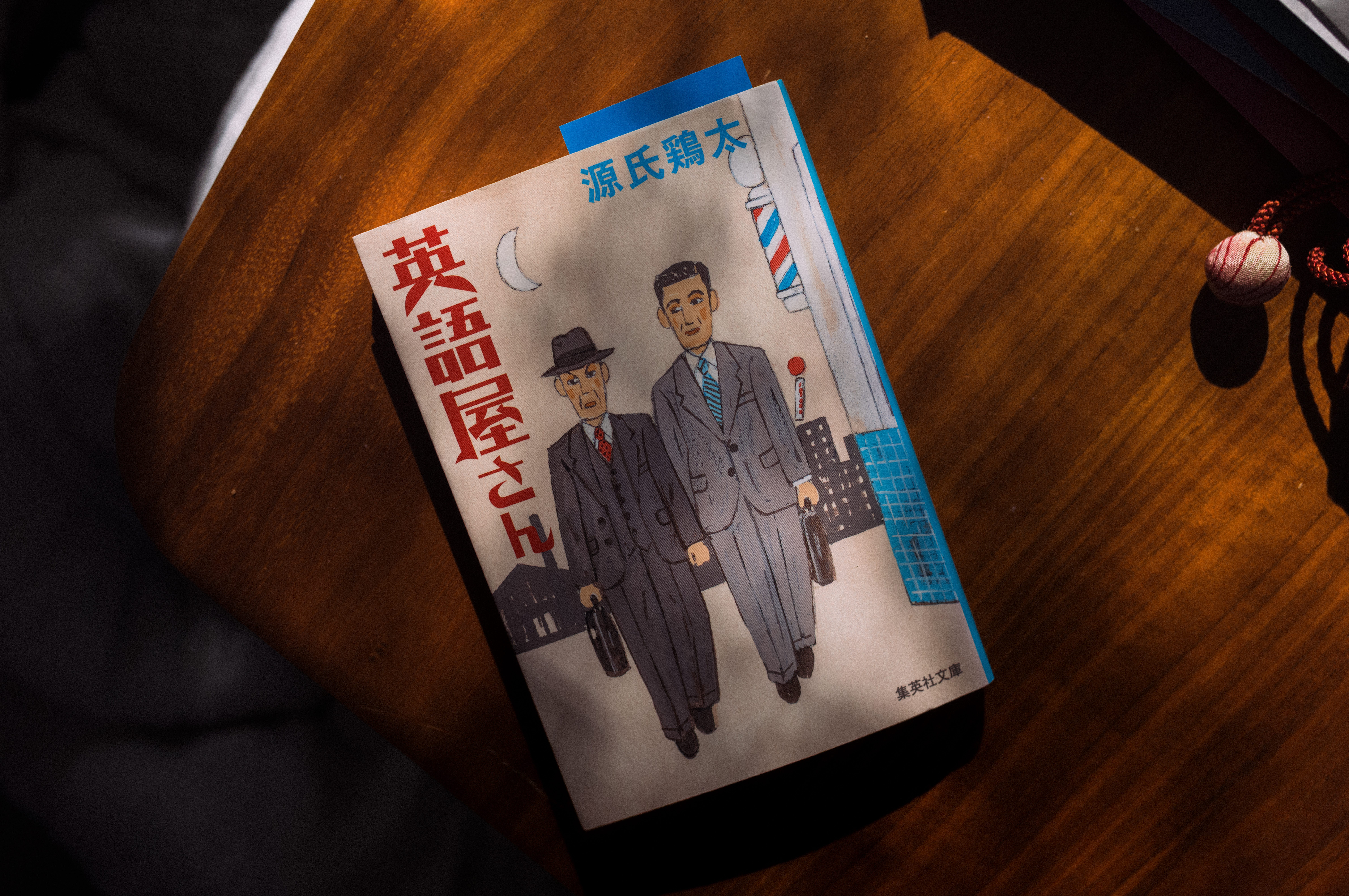
Even if there was no direct relation between the story and the places I saw during my trip, it’s always nice to read an author who is from the place you’re visiting. The story is highly entertaining and well-written, but perhaps a bit difficult to get your hands on if you’re not in Japan. Some of the secondhand bookshops might ship overseas, so make sure to check Amazon JP and Nihon no furuhonya.
Yours,
Bunsuke